



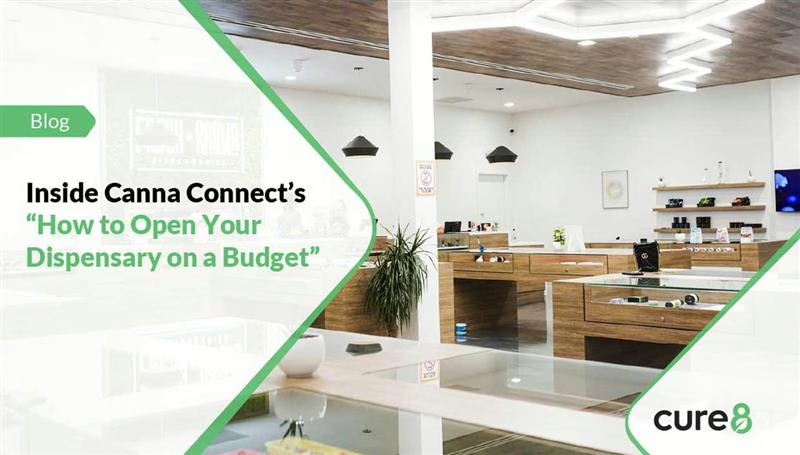
On September 24, cannabis business owners and professionals gathered in Minneapolis for Canna Connect’s second seminar, “How to Open Your Dispensary on a Budget.” Hosted at The Wilderness Fitness & Networking, the one-day event offered actionable guidance to help future Minnesota operators turn their dispensary dreams into reality—without overspending.
The seminar featured a stunning lineup of experts in cannabis operations, tech, security, and retail design. Munir Haque, President of Cure8, and Brytany Melville, President of Forte Operations, were among the speakers who took center stage in defining the day’s discourse. Cure8 also assisted in MCing the event, with seamless transitions and an interesting flow from one session to the next.
For Cure8, which provides cannabis-targeted IT and security infrastructure, the convention was not just a chance to teach; it was an opportunity to connect directly with future dispensary owners and demonstrate the tools and expertise that help them build lasting, compliant businesses.
Building Smart, Not Expensive
At the center of the seminar was one central theme: a successful dispensary isn’t created by how much you spend, but how well you plan.
The class addressed one of the most important, and frequently misunderstood, aspects of opening a cannabis business: budgeting. It was explained that success isn’t necessarily based on the largest budget, but on spending strategically across the proper priorities.
President Munir Haque kicked off the session with a straightforward but strong message: “Technology and security aren’t costs you can cut; they’re the backbone of compliance and reliability.” He described how most new operators don’t appreciate the criticality of selecting solid technology vendors. An inferior network or untested security system can compromise compliance, impede sales, and expose financial liabilities.
Cure8’s presentation provided a concise checklist for dispensary operators, from the selection of the correct POS system and setup of compliant network infrastructure, to adequate camera coverage and data protection.
By demystifying complicated IT and security needs into easy-to-understand language, Cure8 gave participants an honest perspective of what a dispensary actually requires on day one, and what can be delayed to a later day.
The Questions Everyone’s Asking
The seminar also offered a unique chance for open Q&A, where participants shared questions they had concerning Minnesota’s changing market. Typical questions were:
- Where do I begin once I’ve acquired a property?
- Who do I trust to guide me through complicated Minnesota cannabis rules?
- How much do I need to budget for IT and security during buildout?
- How do I decide between vendors without going over budget?
Cure8’s strategy was simple: begin by positioning your plan on compliance and reliability and then construct outward from there. Representatives of the company guided attendees through pitfalls they have seen repeated before, such as approaching IT or security as afterthoughts, and showed how these oversights can lead to critically expensive compliance issues or operational roadblocks in little to no time.
It wasn’t just theory; the conversation featured hands-on examples and practical case studies of dispensaries that had hit roadblocks from unreliable systems or incomplete tech implementations.
“We’ve seen shops lose thousands in downtime just because their Wi-Fi went down or cameras went dark,” Munir had informed. “Those issues are preventable if you get the right infrastructure decisions from the beginning.”
The message was unmistakable: compliance is not merely paperwork. It’s ingrained in your network, your security systems, and your tech stack.
Lessons in Design, Security, and Data
In addition to IT and infrastructure, the conference included major takeaways from other speakers in dispensary operations, such as Dutchie, Solink, Forte Operations, and Temeka Group. Each presented a distinct point of view on how to create an effective, compliant, and customer-ready dispensary from scratch.
Design & Construction:
Forte’s Brytany Melville emphasized that dispensary design is more than aesthetics. Instead, it is operational efficiency in disguise. A well-planned layout minimizes labor costs, streamlines customer flow, and reduces long-term security risks. As she put it, “Design your space like it’s already busy.”
Similarly, Chris Isley of Temeka Group discussed how even minor construction choices, like vault placement and material selection, can impact long-term operational costs and compliance audits.
Security & Surveillance:
Aaron Baird of Solink showed how today’s security systems are evolving from basic monitoring devices into proactive compliance assistants. Solink’s technology not only secures inventory but also streamlines aspects of the auditing process, enabling operators to steer clear of expensive errors.
POS & Data:
Gus Sevastos of Dutchie demonstrated how dispensaries can transform their point-of-sale system into a business intelligence engine. By integrating transactional data with customer data, operators can make more informed inventory decisions, enhance sales forecasting, and maximize marketing efforts.
Marketing & Customer Acquisition:
Eric Johnston (The Grow House) and MacKenzie Ziegler (Surfside.io) capped off the day with essential guidance on pre-launch marketing. Their message was simple: in a regulated market such as Minnesota, your customer outreach should start well in advance of opening your doors.
All these sessions took a broad view of dispensary success: a view founded on careful planning, compliance-driven design, dependable tech, and savvy use of data.
A Day of Learning, Collaboration, and Laughter
Though the debates were filled with technical information, the mood during the event was warm, cooperative, and even jovial. The highlight was when Chris of Temeka Group arrived at the seminar dressed in a printed picture of Munir from a previous band photoshoot with Slant, which made the rest of the audience laugh and put everyone in a casual mood for the remainder of the day.
That communal feeling translated to the networking session that came next. People exchanged contact information, told stories, and talked about implementing what they’d learned. For most, it was the first time they were seeing their vendors and experts face-to-face with whom they could directly take their projects forward.
Why Events Like This Matter
The Minnesota cannabis industry is ever-evolving, and for most business owners, getting on the road to opening a dispensary can seem intimidating. Regulations are sometimes confusing, startup fees are high, and the ramp-up time is steep. Sessions like Canna Connect’s “How to: Open Your Dispensary on a Budget” help close that gap by transforming uncertainty into understanding.
For Cure8, this sort of direct interaction is imperative. The company’s purpose is to equip cannabis companies with compliant, dependable technology from the very start, ensuring licensees don’t merely open their doors, but remain open and flourish.
Learning opportunities such as this one enable Cure8 to listen to concerns directly from operators, stay ahead of trends, and adapt solutions to actual situations. The gathering confirmed that compliance is a given but that success in the practical world of cannabis retail would lie in the adoption of intelligent technology, secure infrastructure, and effective design.
“We don’t simply install networks or cameras,” stated Munir. “We assist our customers in developing confidence. When their systems operate, their staff are able to concentrate on customers, rather than compliance issues.”
The Road Ahead for Minnesota Operators
As Minnesota’s cannabis industry gears up for an exciting future, the wisdom imparted at Canna Connect’s seminar couldn’t be more relevant. Everyone left with notes and checklists, but also with a better sense of direction and purpose.
The big takeaway: Start lean, but build solid.
- Spend on IT and security infrastructure that grows with you.
- Put vendor reliability ahead of low cost.
- Plan your design with compliance and effectiveness in mind.
- Utilize your POS and data tools as decision-making engines, not mere recordkeepers.
- Get brand awareness started early, and long before the first sale.
Every speaker assured that although the regulatory environment of Minnesota is still developing, the fundamental principles of smart business are always the same, and with the right partners, even a small budget can create world-class dispensary.
Final Thoughts
Canna Connect’s “How to: Open Your Dispensary on a Budget” was more than just a seminar. It was a testament to the Minnesota cannabis industry’s eagerness to learn, work together, and expand responsibly. The attendance and participation confirmed that the industry isn’t just picking up speed but evolving in its methods of conducting business.
For Cure8, the day highlighted the need for ongoing education and collaboration. By assisting operators through the rigors of compliance, security, and IT infrastructure, Cure8 remains integral to establishing the infrastructure of this nascent market.
The day wrapped up not with pitches, but with handshakes, laughter, and visions for the future; a suitable conclusion to an event based on pragmatism, cooperation, and hope.
As the Minnesota cannabis landscape continues to evolve, Cure8 is dedicated to empowering operators along the way, because in cannabis retail, success begins only with a sound foundation.
Interested in learning how Cure8 can support your dispensary launch or upgrade? schedule a meeting with us today.