

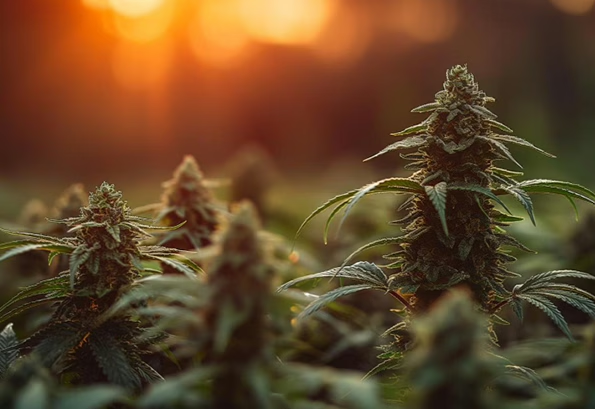

The Rhode Island cannabis market has just embarked on one of the most thrilling periods ever. The state’s Cannabis Control Commission (CCC) is now accepting applications for 24 fresh adult-use cannabis dispensary licenses, representing a significant growth in the Ocean State’s regulated cannabis market. For investors, entrepreneurs, and cannabis operators throughout New England, this Rhode Island cannabis business application period could shape the next decade of the state’s cannabis market.
The new licensure round is more than a growth prospect; it’s a harbinger that Rhode Island is poised to come of age as a competitive, well-regulated, and community-oriented cannabis industry. Ever since adult-use cannabis became legal in 2022, the state has incrementally developed the infrastructure for safe production, sale, and distribution. This latest round is the first major retail expansion in accordance with those new regulations, and it’s projected to redefine the local market from Providence to Westerly.
However, applying for a Rhode Island cannabis dispensary license isn’t a simple process. The state’s application requirements are extensive, the competition is fierce, and the timeline is tight. To help prospective operators prepare, we’ll walk through key facts, eligibility requirements, and practical steps to take, along with insight on how Cure8 can help dispensaries stay secure and compliant from day one.
Why Rhode Island Is Expanding Its Cannabis Retail Network
A Long Time Coming
Rhode Island became the newest state to legalize adult-use cannabis with the Rhode Island Cannabis Act of 2022, following its New England neighbors in establishing a regulated market. The legislation established the Cannabis Control Commission (CCC), the state’s primary regulatory body for cultivation, testing, and retail.
Following over two years of regulatory refinement, the CCC formally concluded its retail licensing regulations in May of 2025, clearing the way for this latest round of 24 new dispensary licenses. Citing Foley Hoag LLP’s cannabis law updates, the CCC developed this expansion to align with economic opportunity, public safety, and social equity.
Structure of the 24 New Licenses
The 24 new licenses will be spread evenly across six geographic zones with four licenses in each zone:
- 2 Open Retail Licenses: Open to any eligible applicant
- 1 Social Equity License: For applicants who meet certain equity and justice requirements
- 1 Worker-Owned Cooperative License: Promoting collective ownership structures
Open and cooperative license application fees are $7,500 with an annual license fee of $30,000. For social equity licenses, the license fee is waived the first year and rises incrementally over five years.
Every applicant will also be required to show site control (by ownership or lease), cooperation with local zoning regulations, and conformance to setback requirements, i.e., no closer than 500 feet from any school property. Since the CCC anticipates more qualified applicants than available licenses, CCC will perform a merit evaluation followed by a public lottery in issuing licenses.
Key Dates: Application Window and Deadlines
As reported by The Providence Journal, the Rhode Island cannabis business application window opened for good in September 2025 and will close on December 29, 2025.
This Rhode Island dispensary application deadline is not negotiable; late or incomplete applications will be rejected. The CCC has indicated that applicants must have all documents, signatures, and attachments prepared ahead of time. Business owners should allow sufficient time for municipal approvals, background checks, and financial verification.
This short window has set off a flurry of activity throughout the state. Scouting out real estate, partnerships, and soliciting investors are already underway. Those who are serious about jumping into the market will have to move quickly to nail down a position before the deadline.
Understanding the Rhode Island Cannabis Licensing Process
This second round of retail licensure for a Rhode Island cannabis dispensary license comes on the heels of the process implemented by the CCC earlier in 2025. It’s a two-phase system aimed at balancing fairness, transparency, and community reward.
1. Eligibility & Threshold Review
- Prospective applicants must provide a fully complete application showing compliance with state law.
- Proof of control of site, zoning approval, and tax compliance are not negotiable.
2. Merit-Based Scoring
- The CCC reviews applications on the basis of business readiness, community outreach, financial health, and security planning.
3. Public Lottery
- When there are more qualified applicants than licenses issued per zone, a public, random drawing is used to select winners.
This approach helps ensure equitable access to the industry while maintaining rigorous standards.
How to Open a Dispensary in Rhode Island: A Step-by-Step Overview
Starting a cannabis retail operation in Rhode Island requires careful planning, capital investment, and compliance discipline. Below are the essential steps every applicant should follow:
- Form a Legal Entity and Prepare Documentation: Create a properly registered business entity (LLC, corporation, or partnership). You’ll need certificates of good standing, articles of incorporation, and state/federal tax IDs.
- Choose Your Zone and License Type: Explore the six retail districts. Consider population density, competition proximity, and city sentiment toward cannabis. Select from an open retail, social equity, or cooperative license depending on your application.
- Secure a suitable property: Applicants are required to provide evidence of site control. This may be a deed, lease, or purchase agreement subject to approval of license. Ensure that your property complies with zoning and separation requirements. City approval is required.
- Create a Complete Business Plan: Your business plan must cover:
- Start-up expenses and sources of capital
- Business operational strategy and organizational structure
- Revenue forecasts and fiscal sustainability
- Marketing and community outreach plans
- Create a Sound Security and Compliance Plan: Cannabis is one of the most heavily regulated sectors in the U.S., and security is key to compliance. A solid application contains full protocols for:
- Video monitoring and alarm systems
- Limited access control
- Seed-to-sale tracking systems
- Inventory and cash handling procedures
- Incident reporting and record keeping
For a detailed review of cannabis security best practices, see Cure8’s Ultimate Guide to Cannabis Dispensary Security.
- File the Application Prior to the Deadline: Attach all necessary fees, attachments, and certifications. Incomplete applications are disqualified.
- Get Ready for Inspection and Final Licensing: If approved, your website will be subject to an on-site inspection to ensure it complies with all security, safety, and operational standards before the license is issued.
Adhering to these guidelines for applying for a dispensary license prevents applicants from incurring unnecessary delay costs and remains in accordance with state compliance regulations. Following these steps to apply for a dispensary license in Rhode Island can position applicants for long-term success
Market Outlook: A Small State with Big Potential
Rhode Island’s adult cannabis market might be small, but it’s potent. The state could reach more than $165 million in yearly cannabis sales by the close of 2025, fueled by tourism and being near Massachusetts and Connecticut, reports The Cannabis Business Advisors.
Currently, there are just seven hybrid dispensaries statewide, so this new round could increase retail availability more than fourfold. This is likely to improve consumer access and support local entrepreneurship, especially through the worker-cooperative and social equity programs.
The scarcity advantage of the Rhode Island market is also fostered by the limited number of licenses. In contrast to open-license states, all licenses here possess long-term worth, particularly in heavy traffic corridors like Providence County and Newport County.
Challenges and Common Pitfalls
Although a golden opportunity, Rhode Island’s cannabis licensing round is complicated and competitive. Common pitfalls include:
- Filing incomplete paperwork or lacking municipal approvals
- Underestimating overall start-up expenditures and compliance costs
- Weak or boilerplate security and operational plans
- No engagement with the community or negative local reaction
- Not being able to show financial transparency
All of these blunders can sideline an otherwise solid Rhode Island cannabis business application. A consistent, detail-focused strategy is essential.
Post-Licensing: Compliance Never Ends
Winning a Rhode Island cannabis license in 2025 is just the beginning. Once operational, dispensaries must maintain continuous compliance, including seed-to-sale tracking, inventory audits, recordkeeping, and periodic inspections.
Operators must renew their licenses annually and notify the CCC of any ownership changes or structural modifications. Maintaining high standards of safety and transparency is not just a regulatory obligation; it’s a competitive advantage in a maturing market.
Why Timing is Everything
The time frame between application submission and the December 29 deadline is limited. Because municipal permits, capital checks, and planning for facilities may take months, taking too long to start may render an otherwise worthy applicant ineligible.
That’s why it’s so important to engage with the right partners up front; from regulatory experts and architects to IT and security vendors, and thus emphasizing why starting your Rhode Island cannabis dispensary license application early can make or break your chances.
Build Your Dispensary on a Solid Foundation with Cure8
Securing a Rhode Island cannabis dispensary license requires as much preparation for business as it does bureaucracy. The IT infrastructure and security setup of your dispensary will play the key role in regulators determining your readiness and professionalism.
Enter Cure8.
Cure8 is a reputable cannabis security and IT partner with a history of supporting dispensaries, distributors, and cultivators in remaining compliant and secure. We help applicants design secure IT systems that strengthen their Rhode Island cannabis business application package. From full installations and compliance monitoring to cannabis security consulting, we assist you in creating a system that works just as hard as you do.
Whether you’re planning surveillance systems, deploying POS and track-and-trace software, or organizing your compliance documentation, we can guide you to prevent costly delays and maintain your application audit-ready.
If you’re gearing up to enter Rhode Island’s growing cannabis market, don’t leave things to the last minute. Begin laying your groundwork today. Reach out to Cure8 or schedule an appointment to speak with us about your Rhode Island cannabis dispensary license strategy.